This photographic series was developed for a photo project in the 2019/20 winter semester implemented by the Internationale Photoszene Köln together with Ströer and the Köln International School of Design (KISD).
Oriented by the Prof. Iris Utikal and Prof. Michael Gais, the students had to think about a topic related to public space and its architectural, social, cultural and political effects.
A jury, which included Prof. Iris Utikal (KISD), Damian Zimmermann (Photoszene) and Thomas Luppa (Ströer), as well as the director of the MAKK - Museum for Applied Arts Cologne, Petra Hesse, and the Cologne artist Max Regenberg, selected the five winners Eradj Yakubov & András Szombathy, Ekaterina Bobrova, Julian Spath, Catarina Ramos and Beatriz Simões from the submitted series.
This project was exhibited in public spaceon Ströer's digital advertising media in the city of Cologne between 21 and 28 May 2021, during the Photoszene 2021 Festival.
Facial recognition technology is the ability of a computer to recognise people's faces from photographs or cameras. Since the topic was about public space, I focused on this area.
This technology is an important tool. While it can be used for good reasons in terms of security, solving crimes or even finding lost people, it can also be used in a very abusive way by the government and private companies. Add to this the lack of regulatory laws and the proven existence of bias in terms of genre and colour, as well as the fact that the cameras are not even noticed by passers-by, and it is clear that the use of FRT should be urgently discussed.
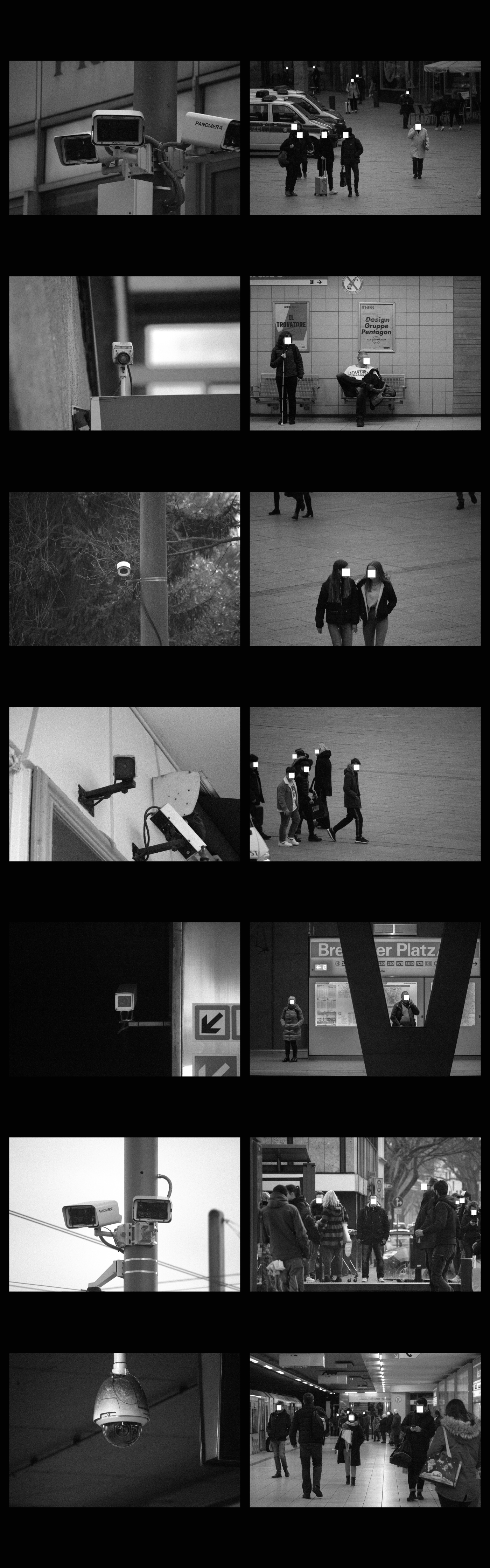
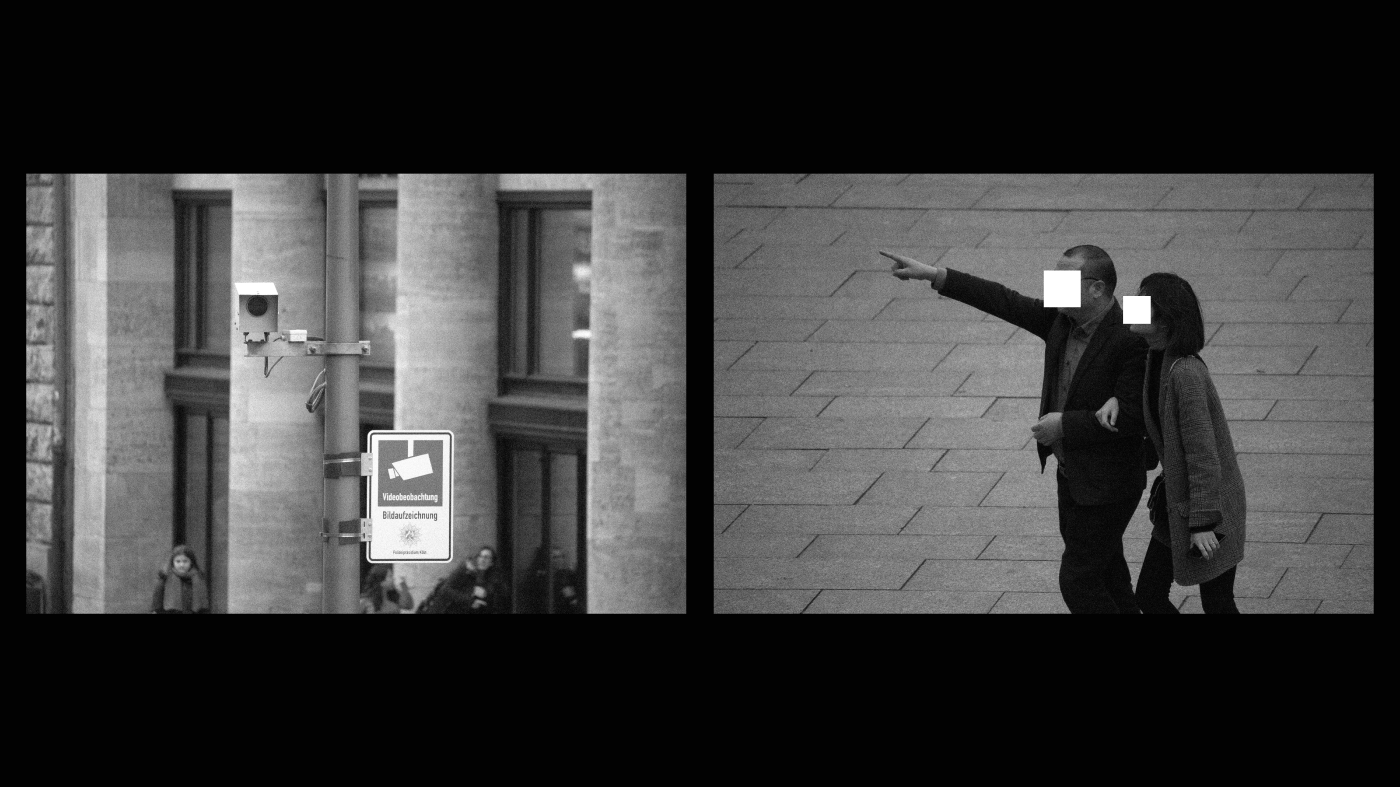
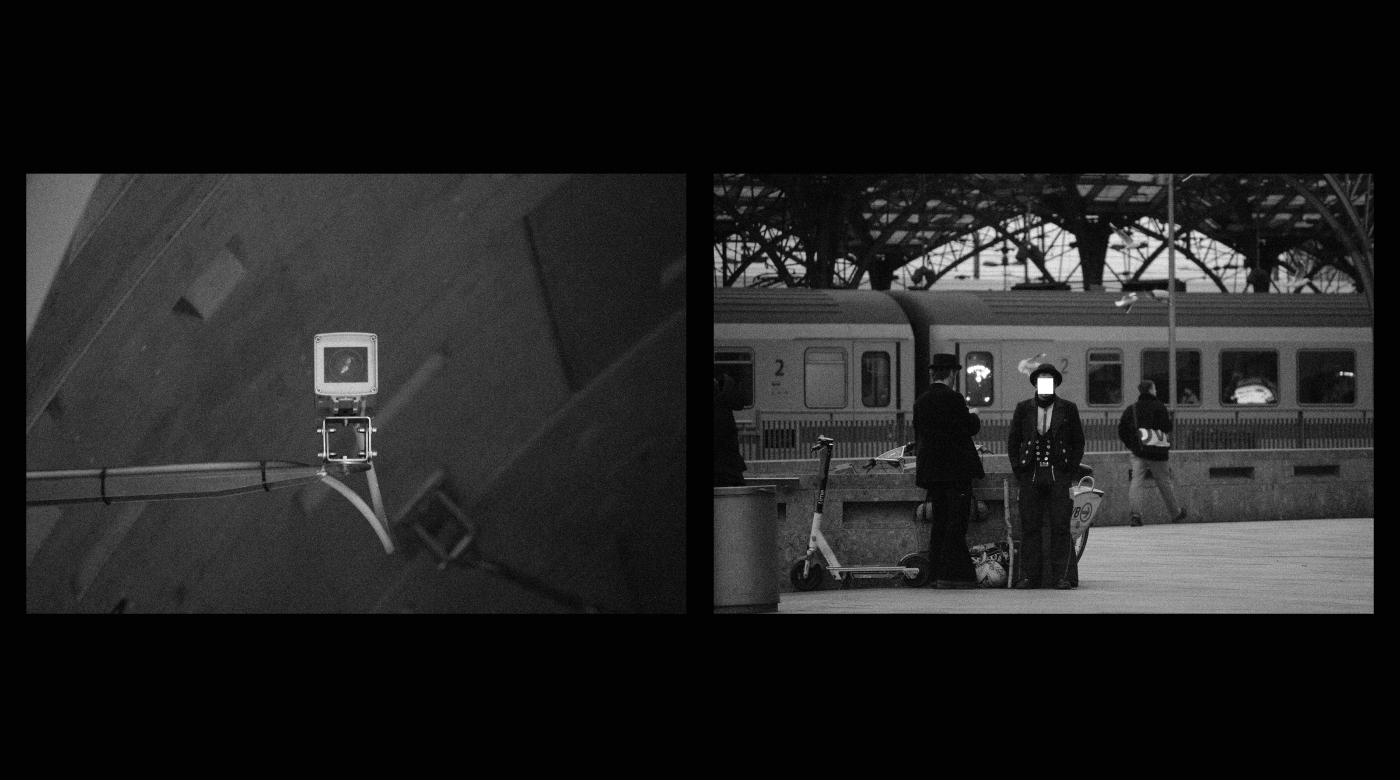
This project shows a photographic duo. On the left is a camera: objective, large, staring at the viewer. It is designed to make people feel watched, seen and recorded. On the right, what the camera sees: passers-by on the street, on the tram, from children to the elderly, without faces. The white squares in people's faces are meant to show that they don't belong to them anymore, that they have been taken. In addiction, the fact that it is not possible to tell who these people are in the photo can help the viewer to identify with them, and even question whether they are not themselves. The use of a black and white aesthetic is intended to simulate the vision of the camera, while at the same time giving a cold, impersonal approach. The intention is to be provocative, using exaggeration and extreme situations to raise awareness and debate the future we seem to be heading towards.