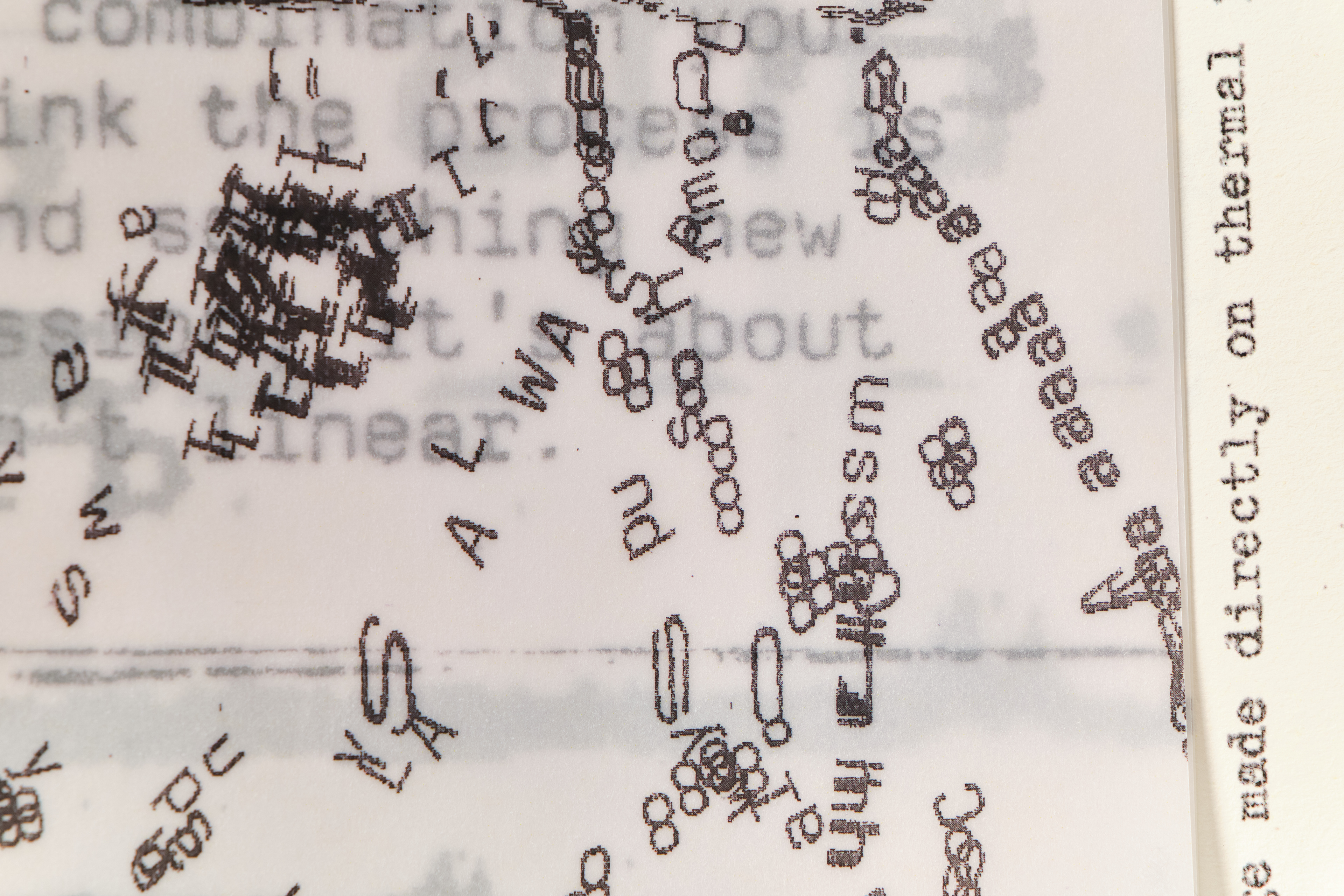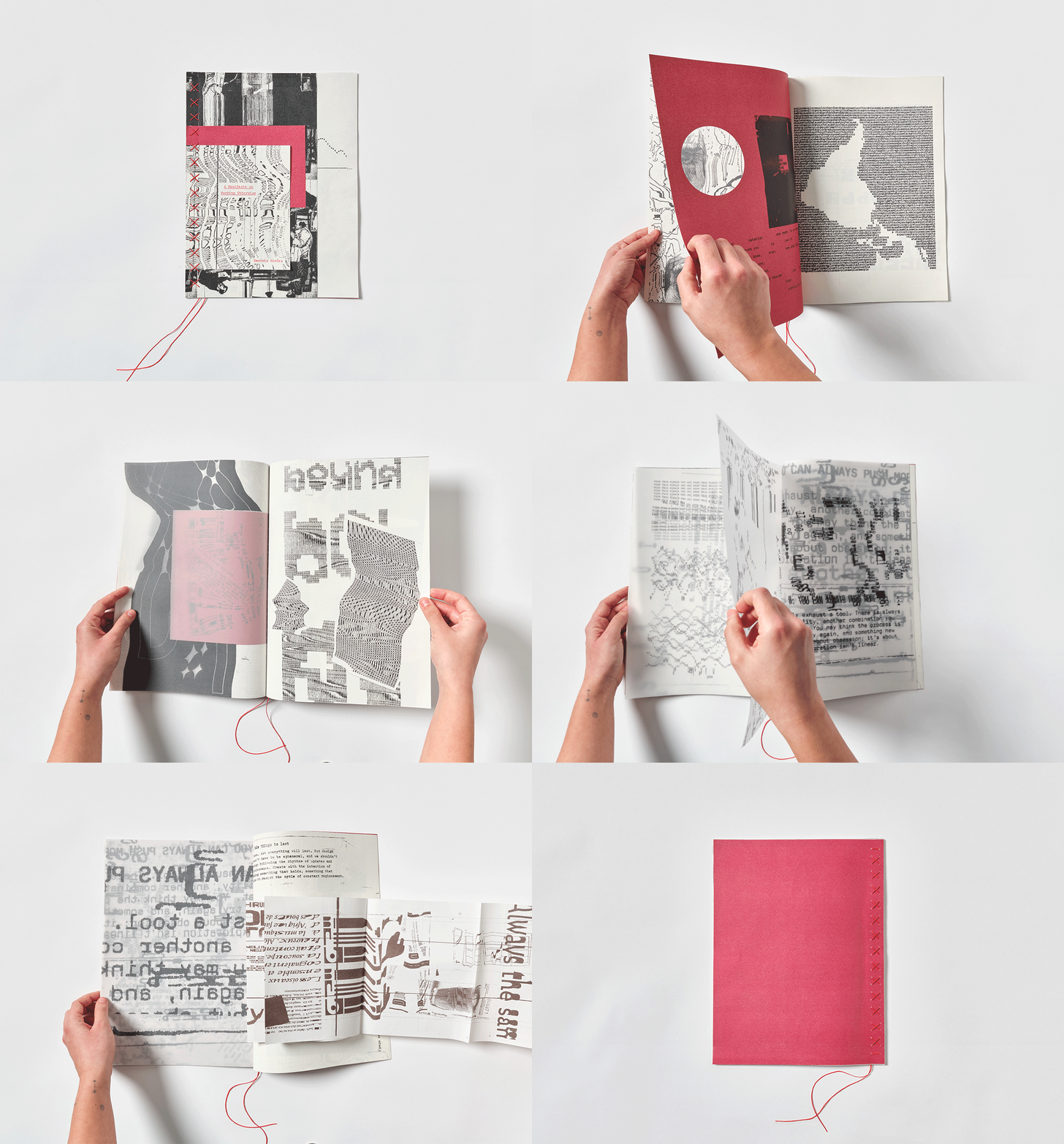
A Manifesto on Working Otherwise is a result of a practical investigation of my Master's Thesis at Köln International School of Design (KISD - TH Köln). It investigates alternative approaches to graphic design practice by questioning the dominance of efficiency, productivity, and speed in contemporary work culture. Based on reflections on acceleration, performance, and resonance, and on the concept of material literacy, the research examines how design processes can be reoriented toward autonomy and sustained engagement with tools and materials. The study adopts a practice-based methodology centered on long-term hands-on exploration, in which thinking and making happen together.
Through the deliberate repurposing of office machines, the research explores how constraints, material behaviours, and chance actively shape decision-making and ideation. The project approaches tools as active agents that influence the process and relate to the designer.
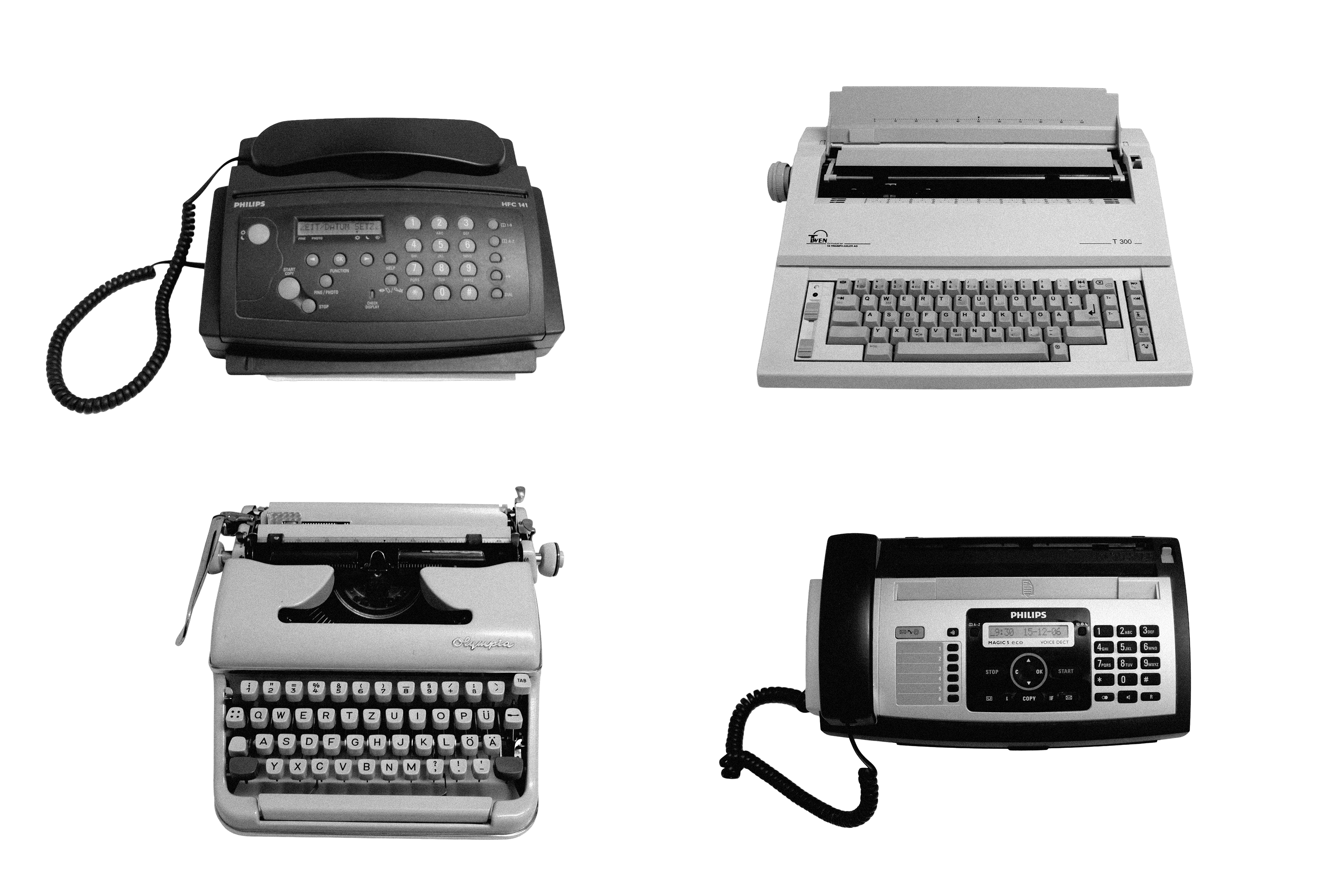
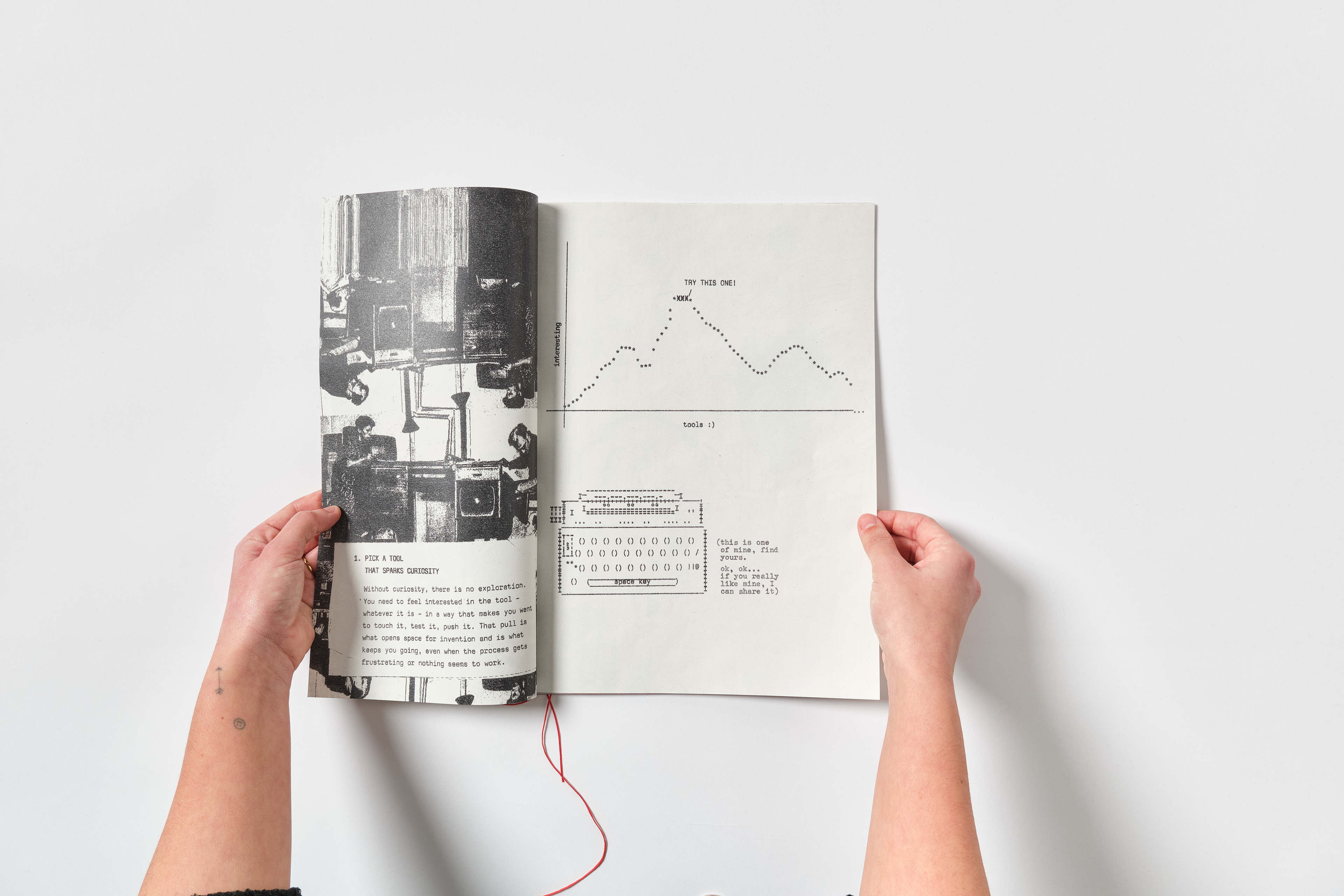
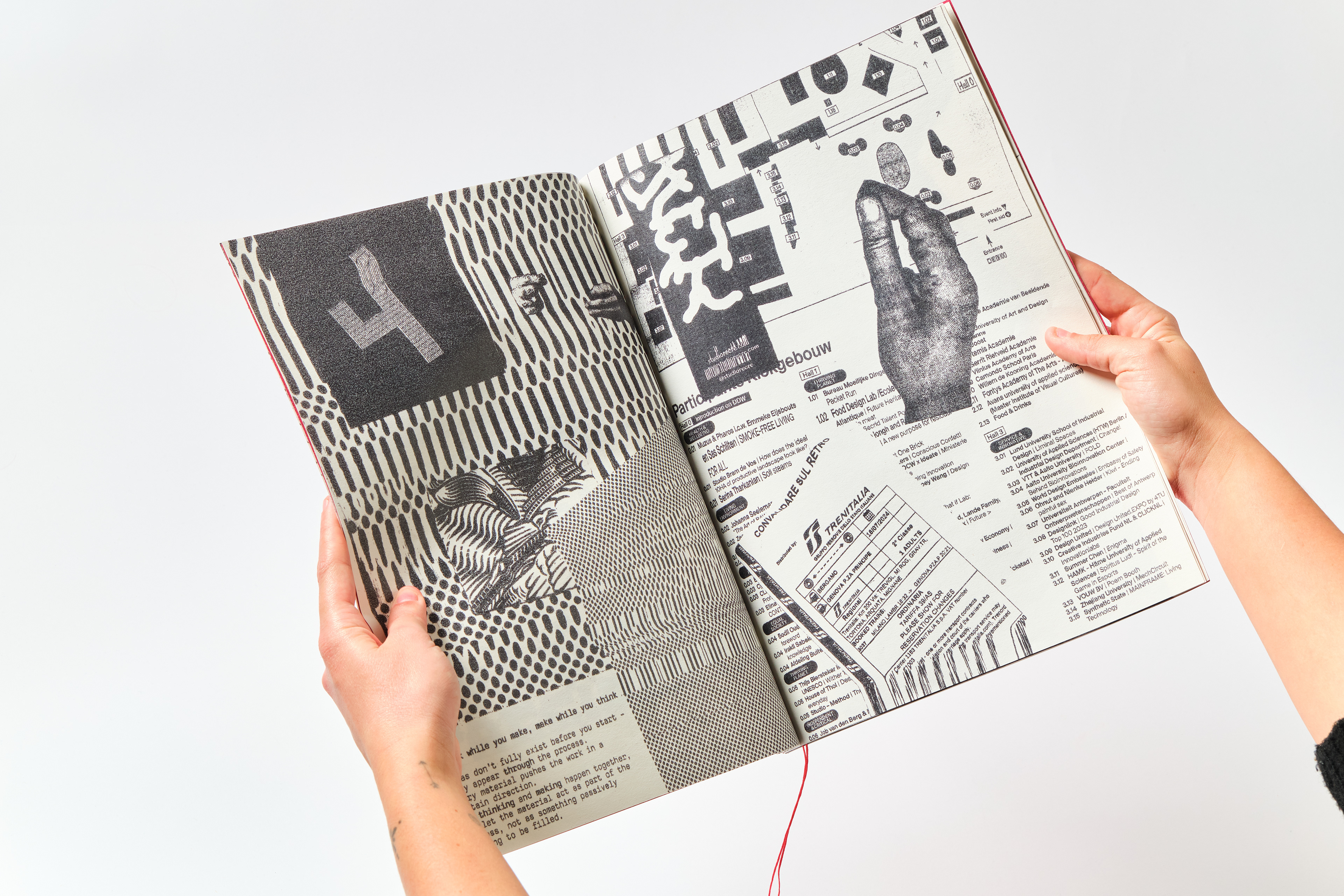
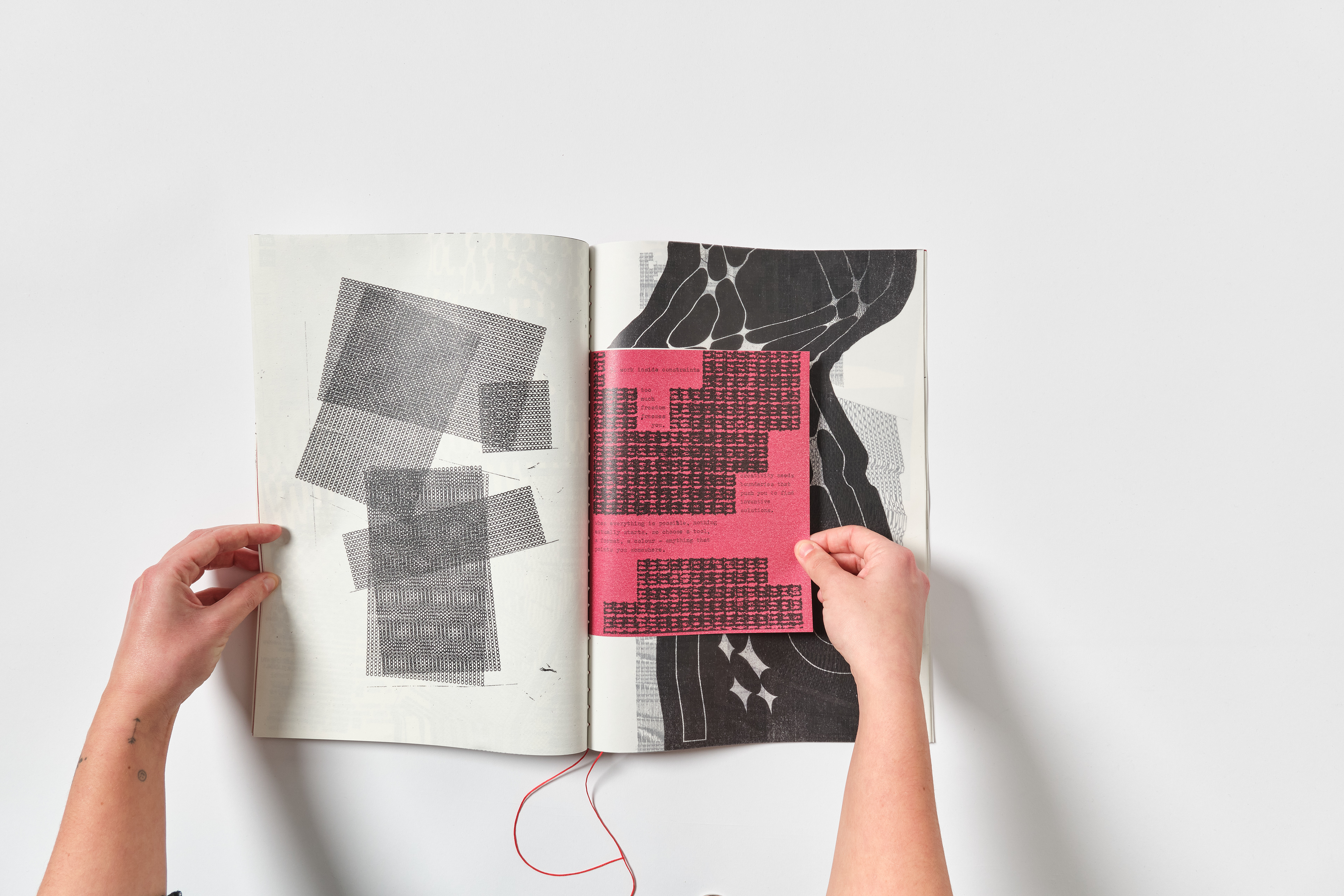
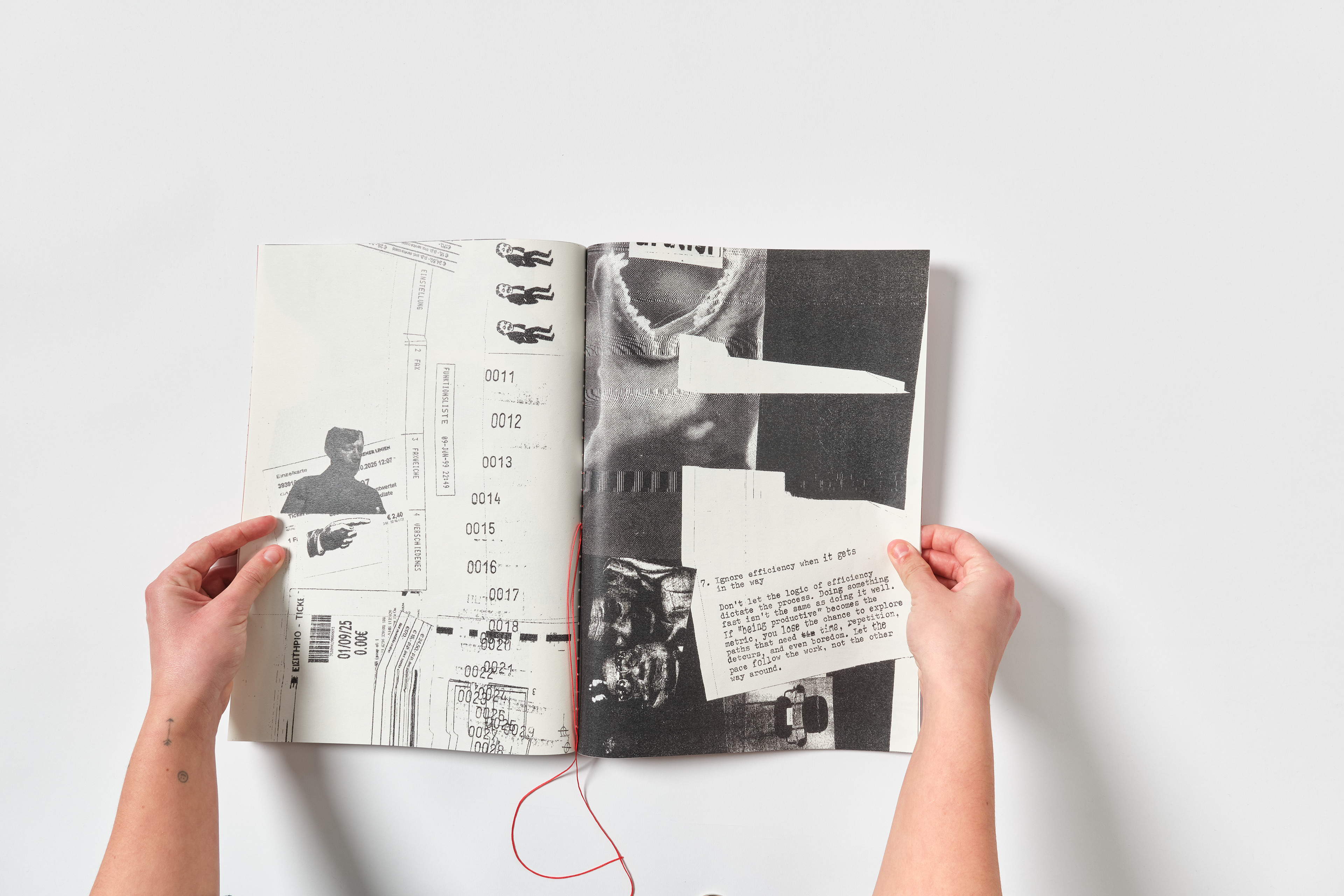
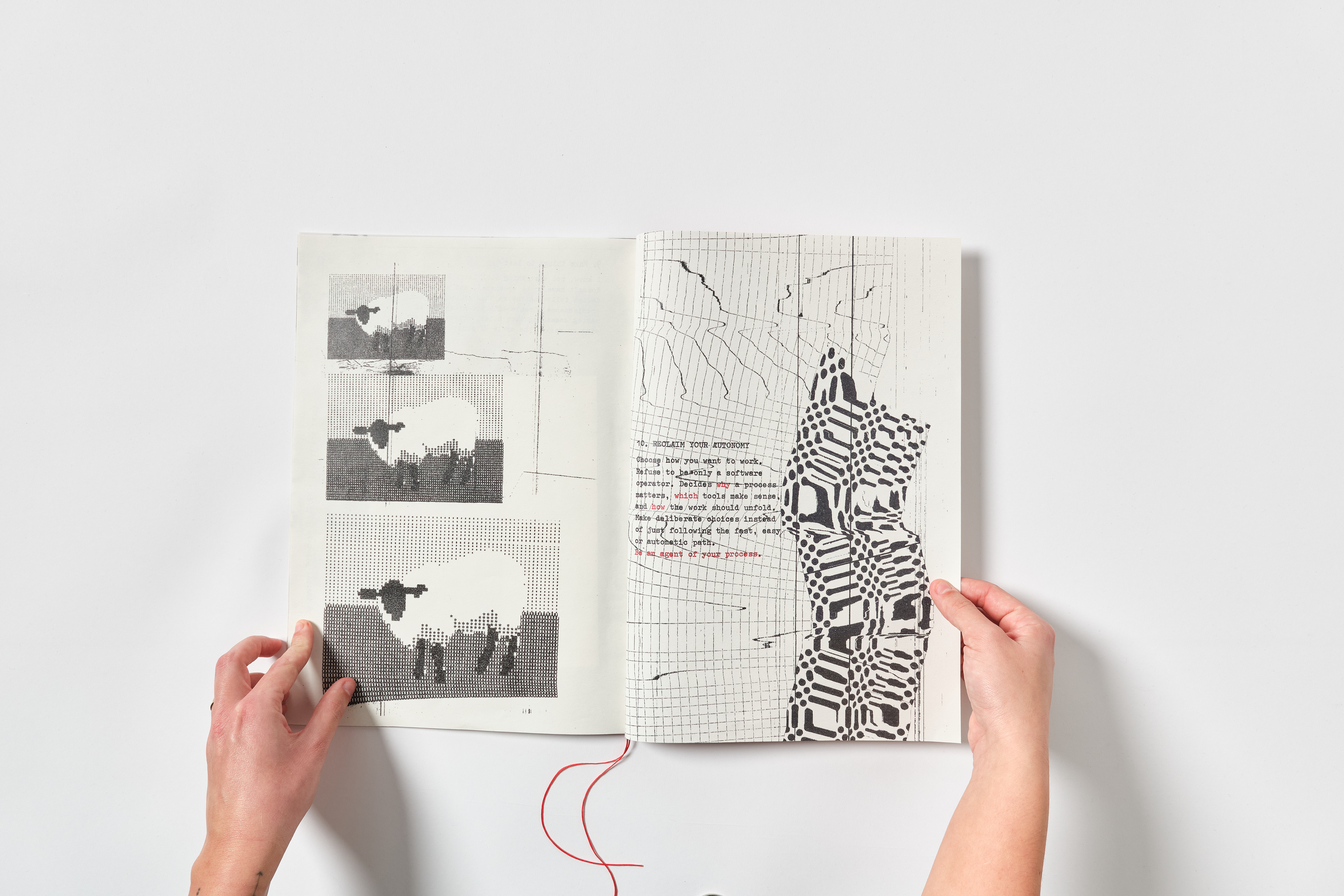
The development of the manifesto was exclusively made with an analog typewriter (Olympia SM9, 1964), an electric typewriter (Triumph-Adler Twen T 300, c.1985), a fax machine that uses thermal paper (Philips HFC 141), and another fax machine (Philips Magic 5 eco voice dect) that uses plain paper and a thermal transfer ribbon. Additionally, I used an old rotary number stamp and ephemeral papers that I had collected over the months (tickets, packaging, flyers, postcards). Nothing was produced digitally, and nothing was printed for the project. Once done, the analog-made pages were scanned, and copies were printed.
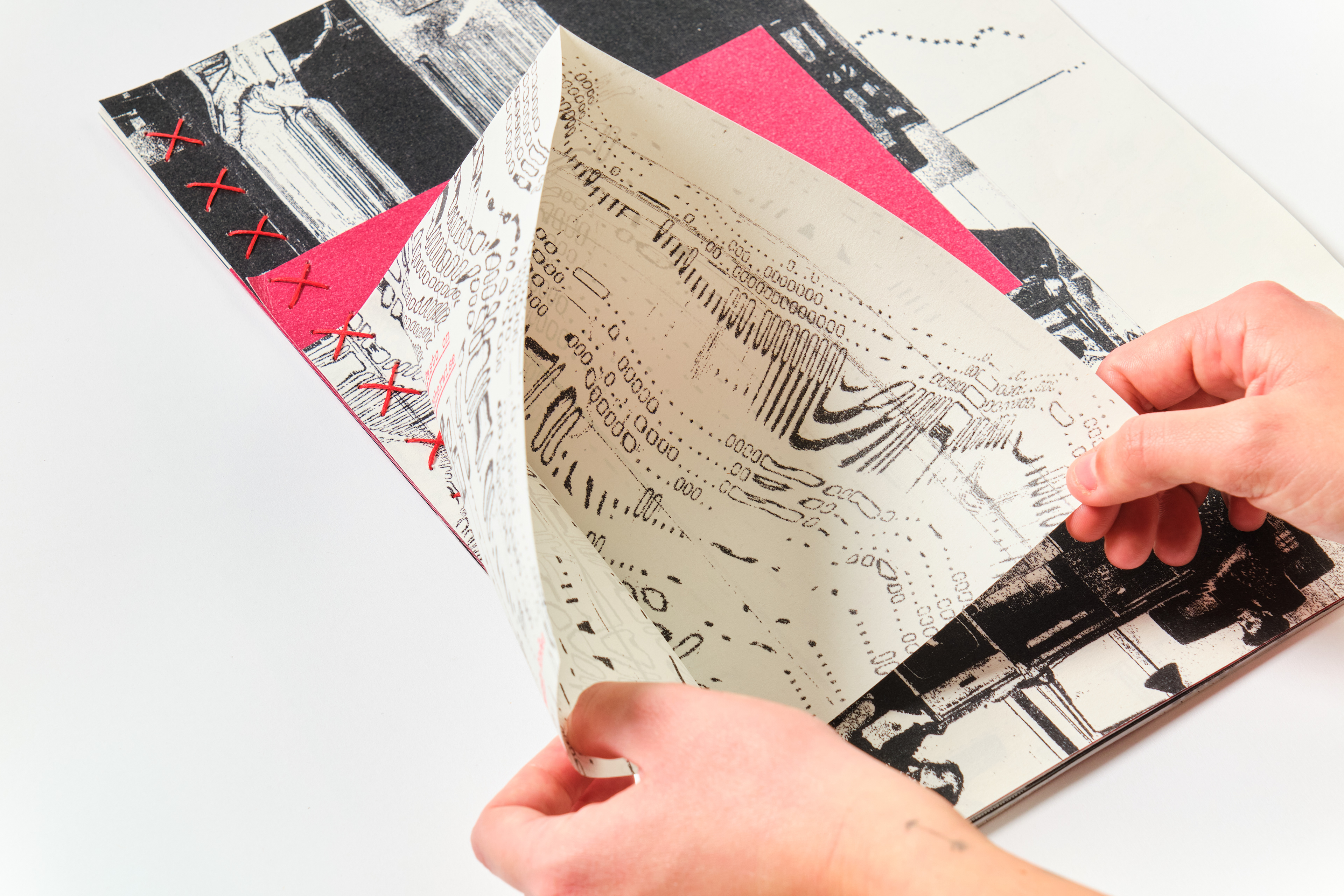
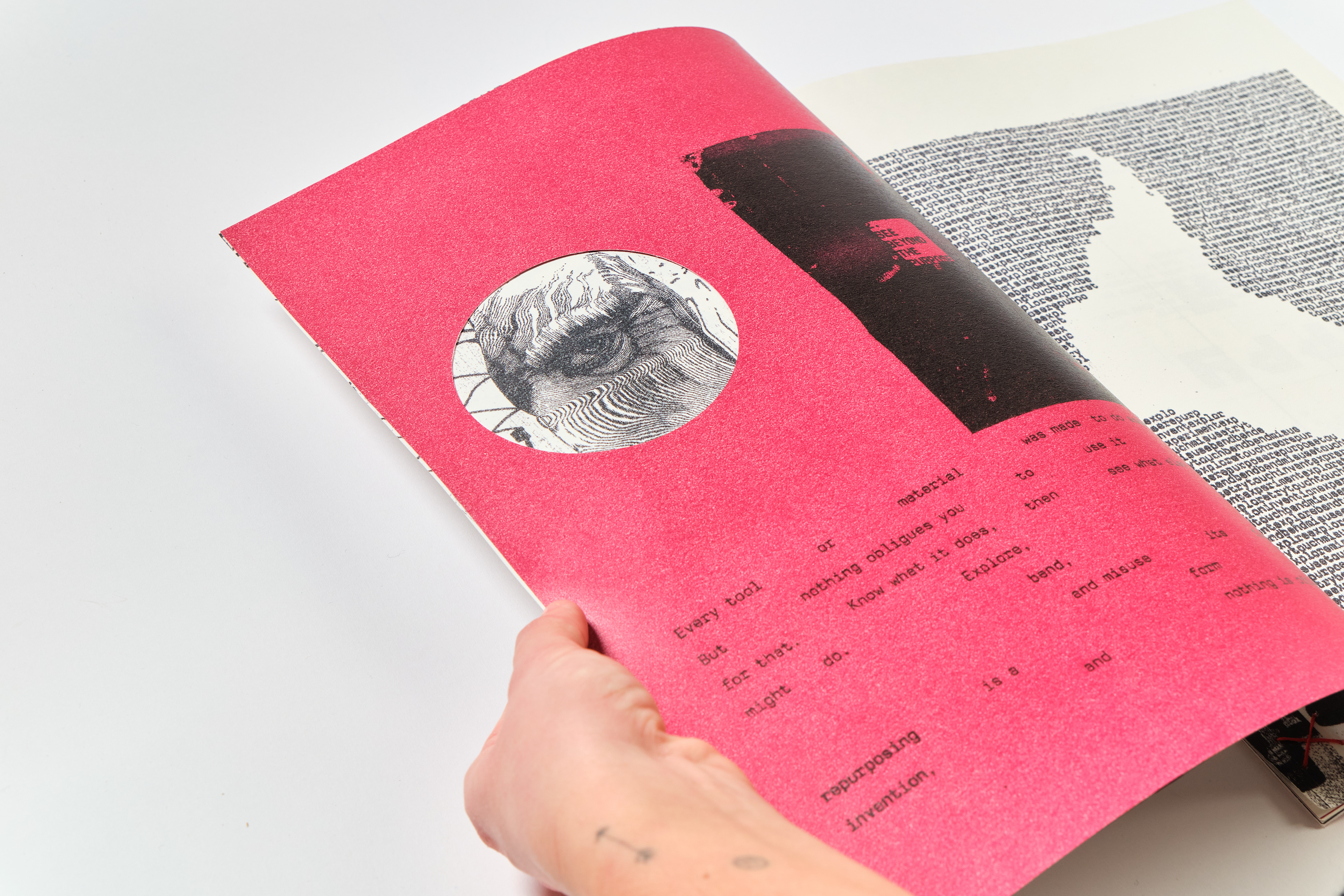
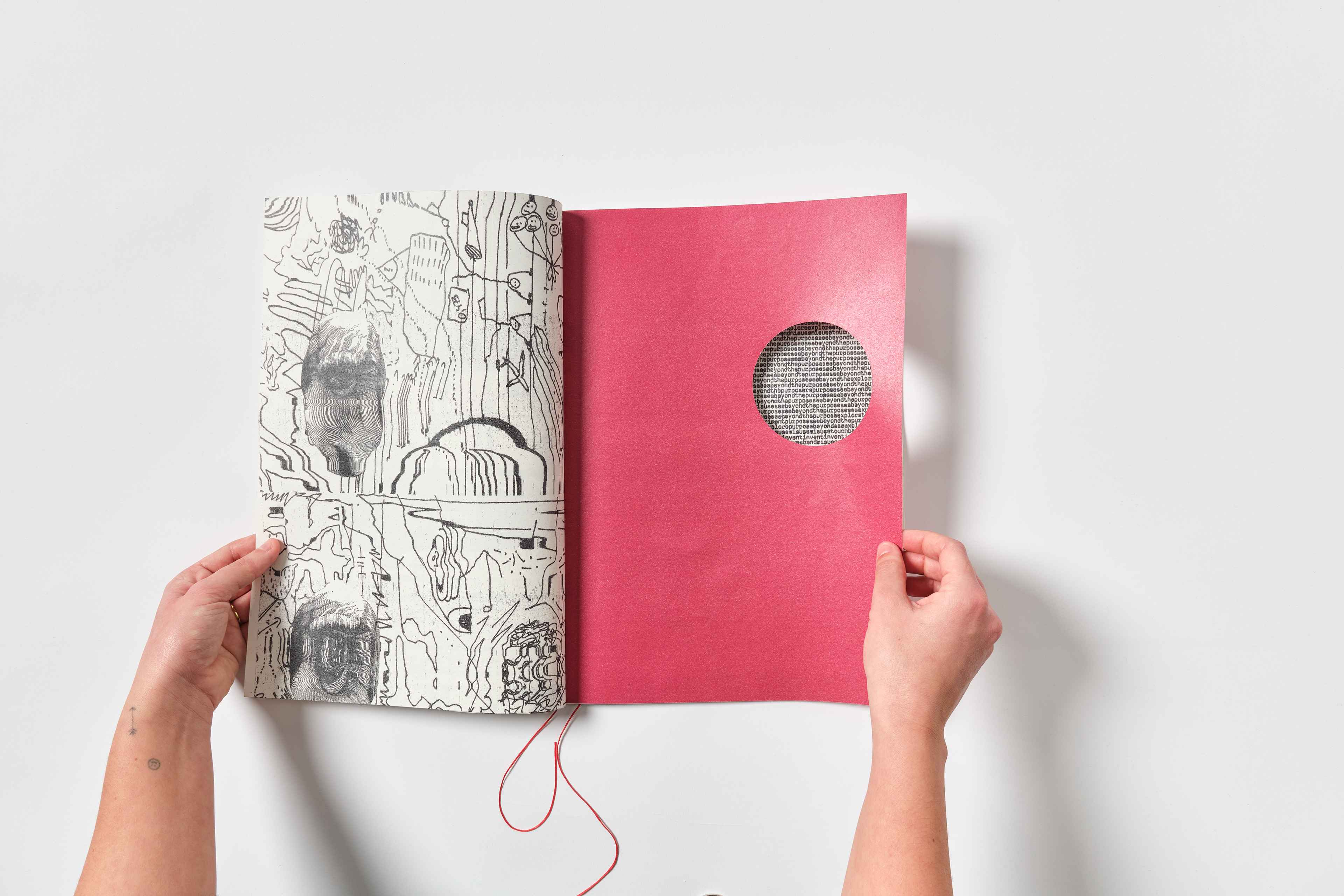
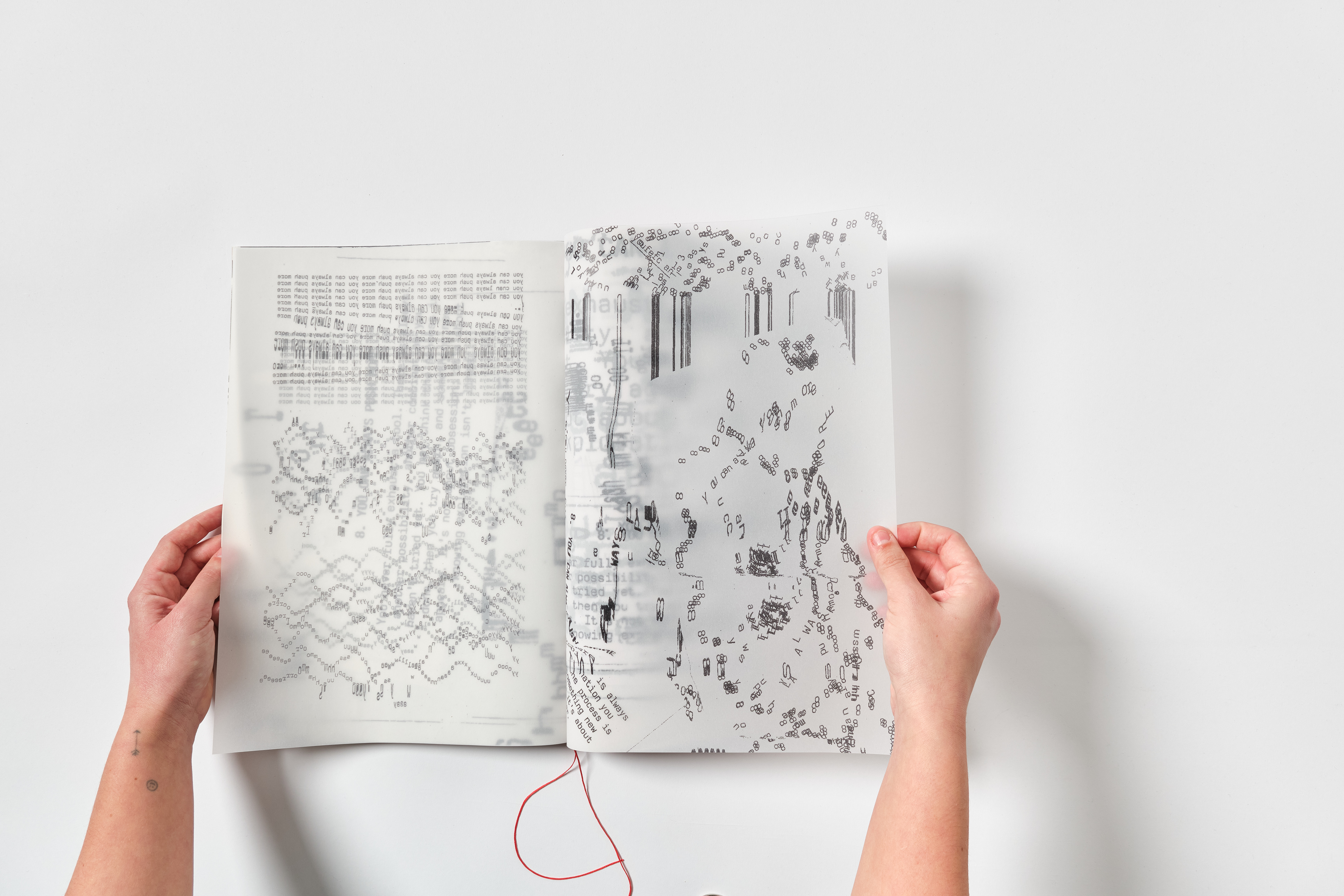
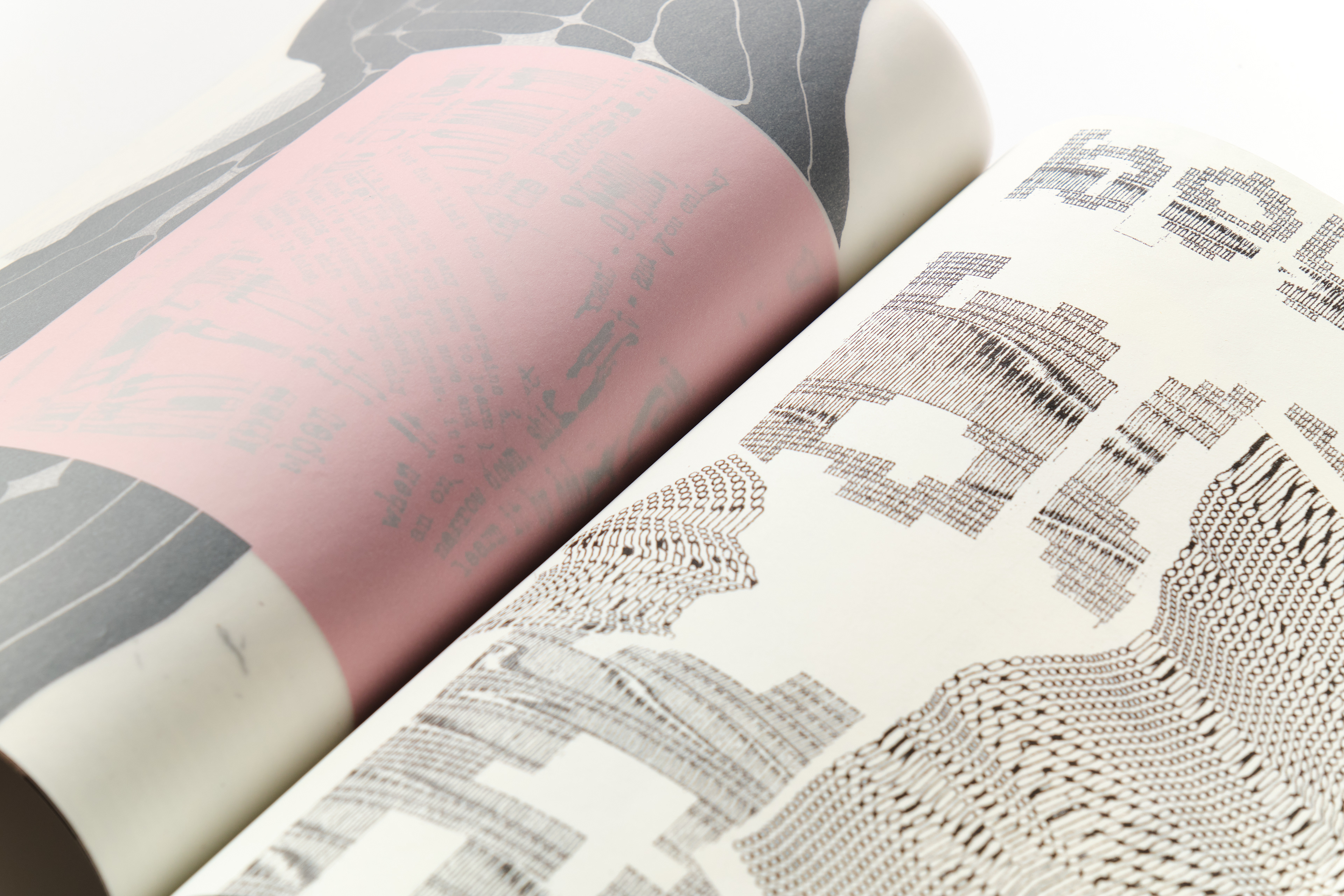
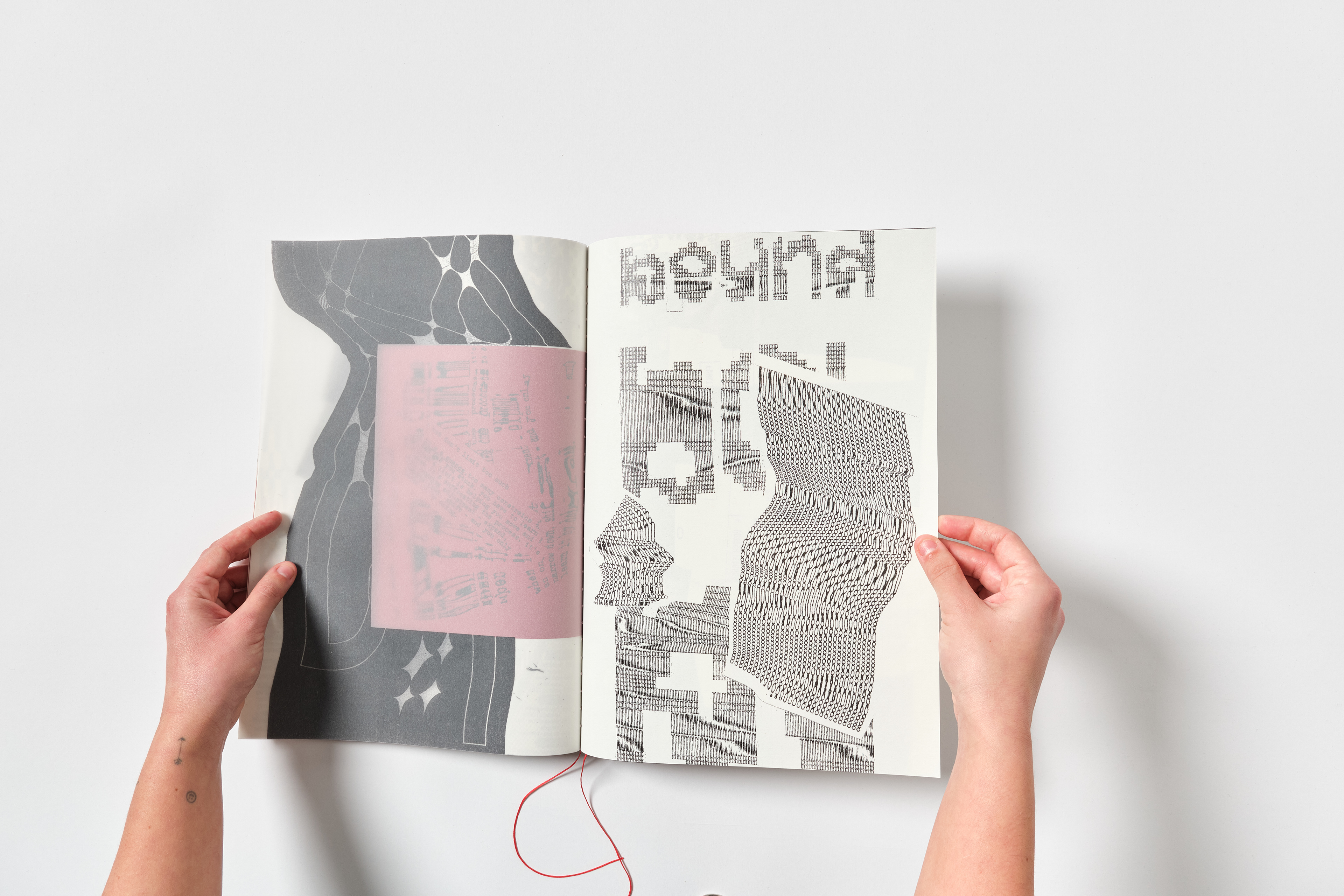
For the paper choice, I wanted to evoke a tactile experience while reading the manifesto. Considering the limitations of single-copy printing, I chose a 90g/m2 cream-colored sketch paper with a fine grain. For the transparent pages, I used a smooth, highly transparent 80/85 g/m2 paper.
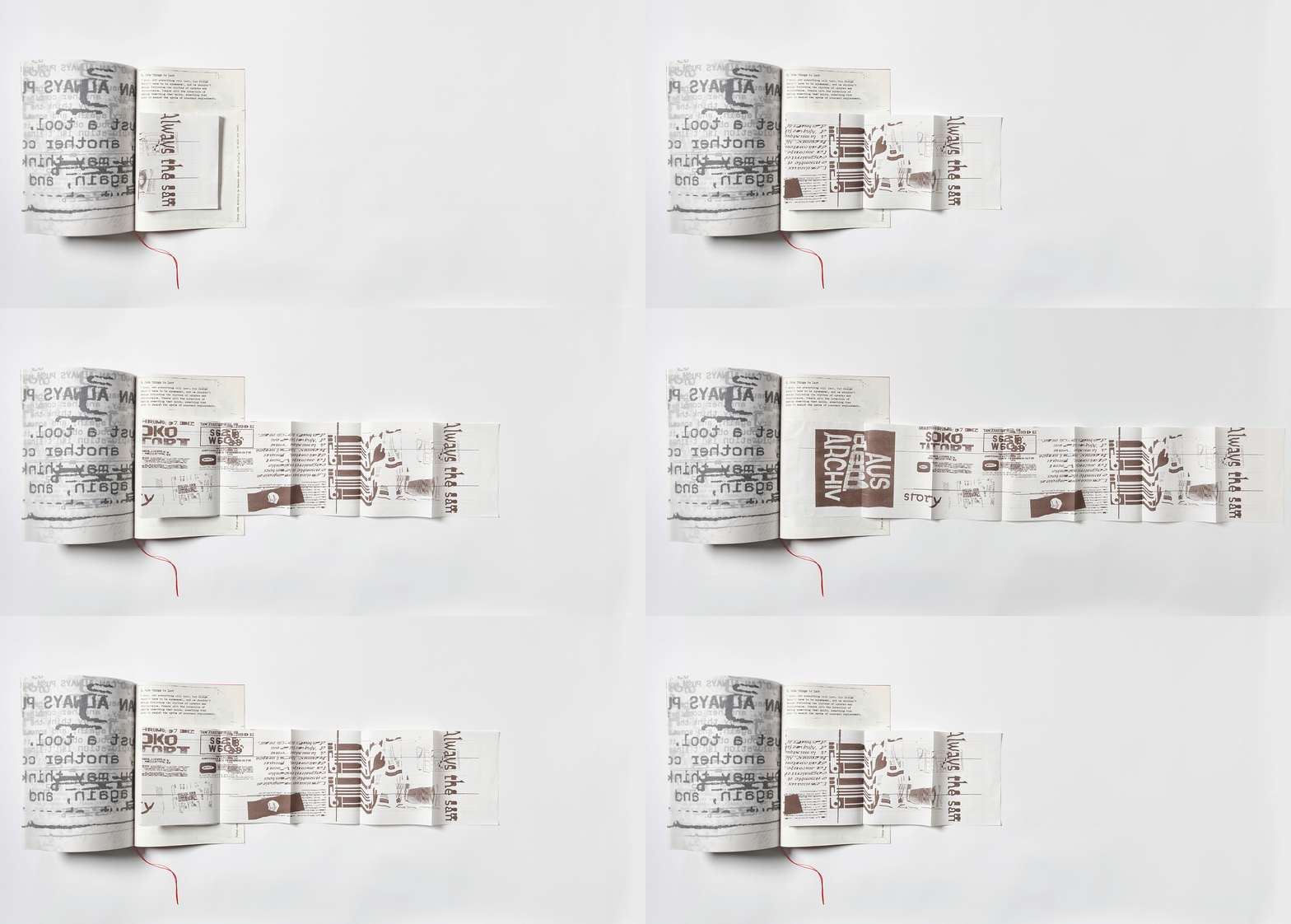
In a specific case, to illustrate a point from the Manifesto "Make things to last", a page was created using a fax machine and thermal paper. This page will eventually fade as it is exposed to daylight, creating a paradox.
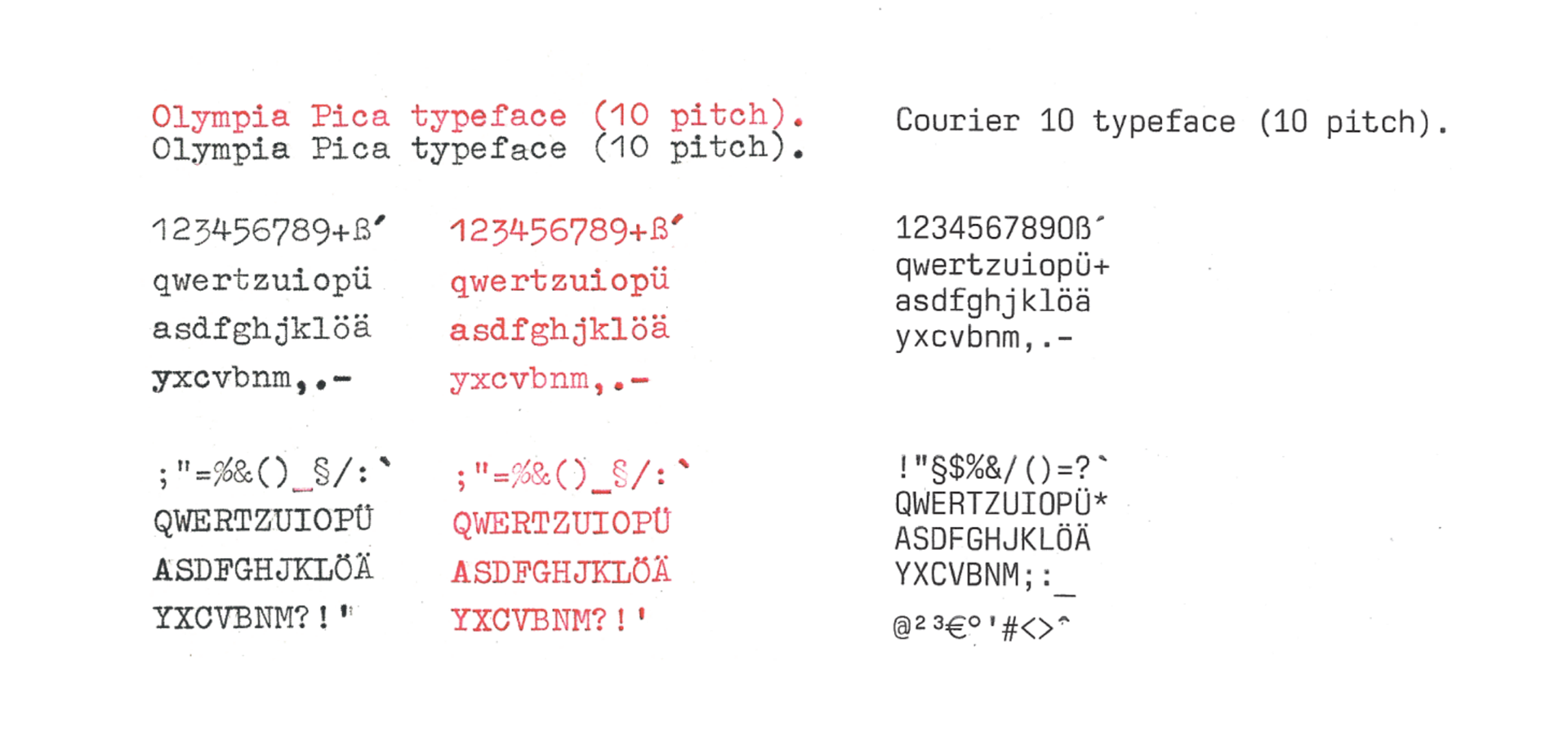
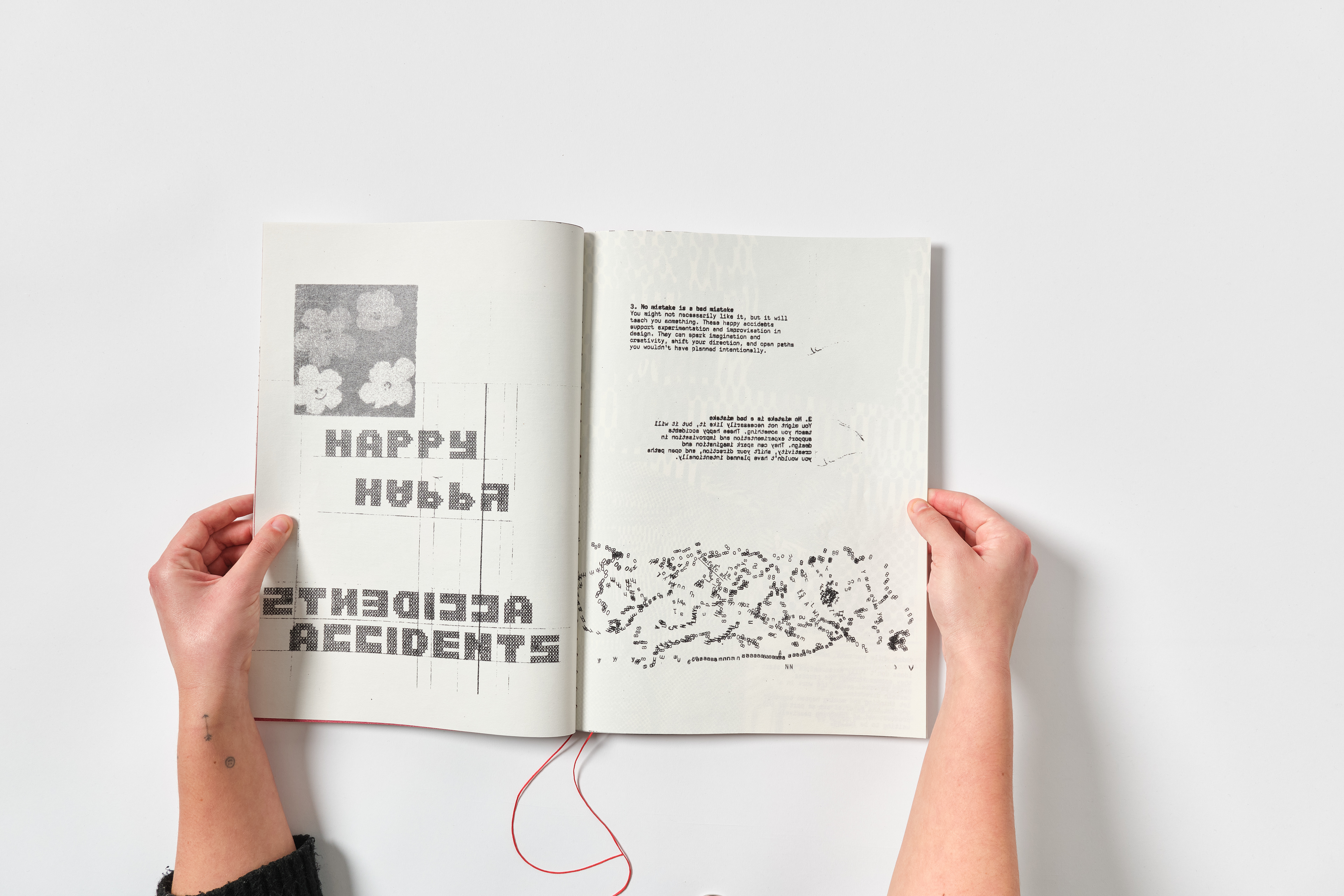
Regarding typography, except for text already present in papers, tickets, flyers, and other printed materials that
I used in the fax machines, the only typography used came with the typewriter machines. I also used
the letters to make different lettering.
I used in the fax machines, the only typography used came with the typewriter machines. I also used
the letters to make different lettering.
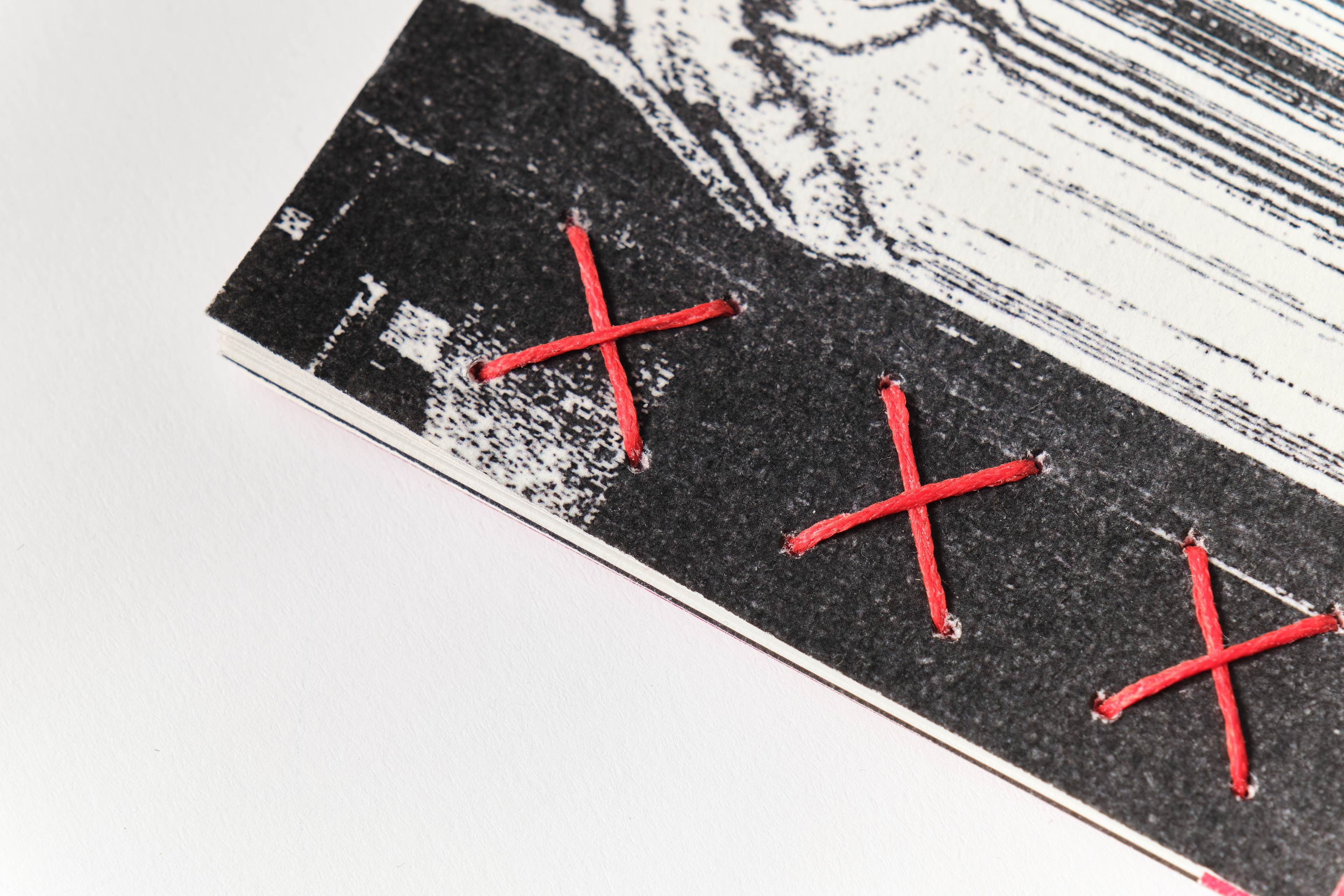
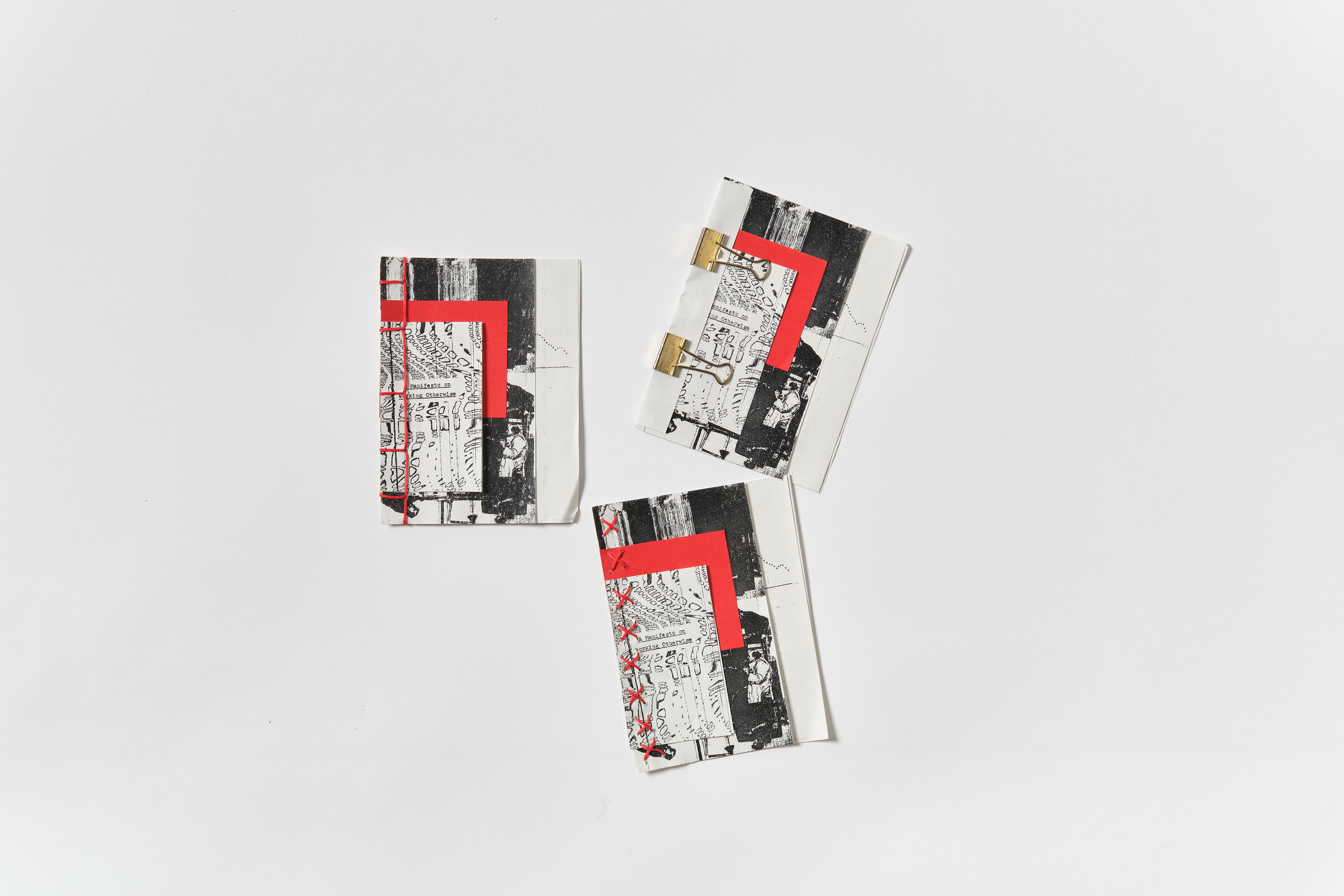
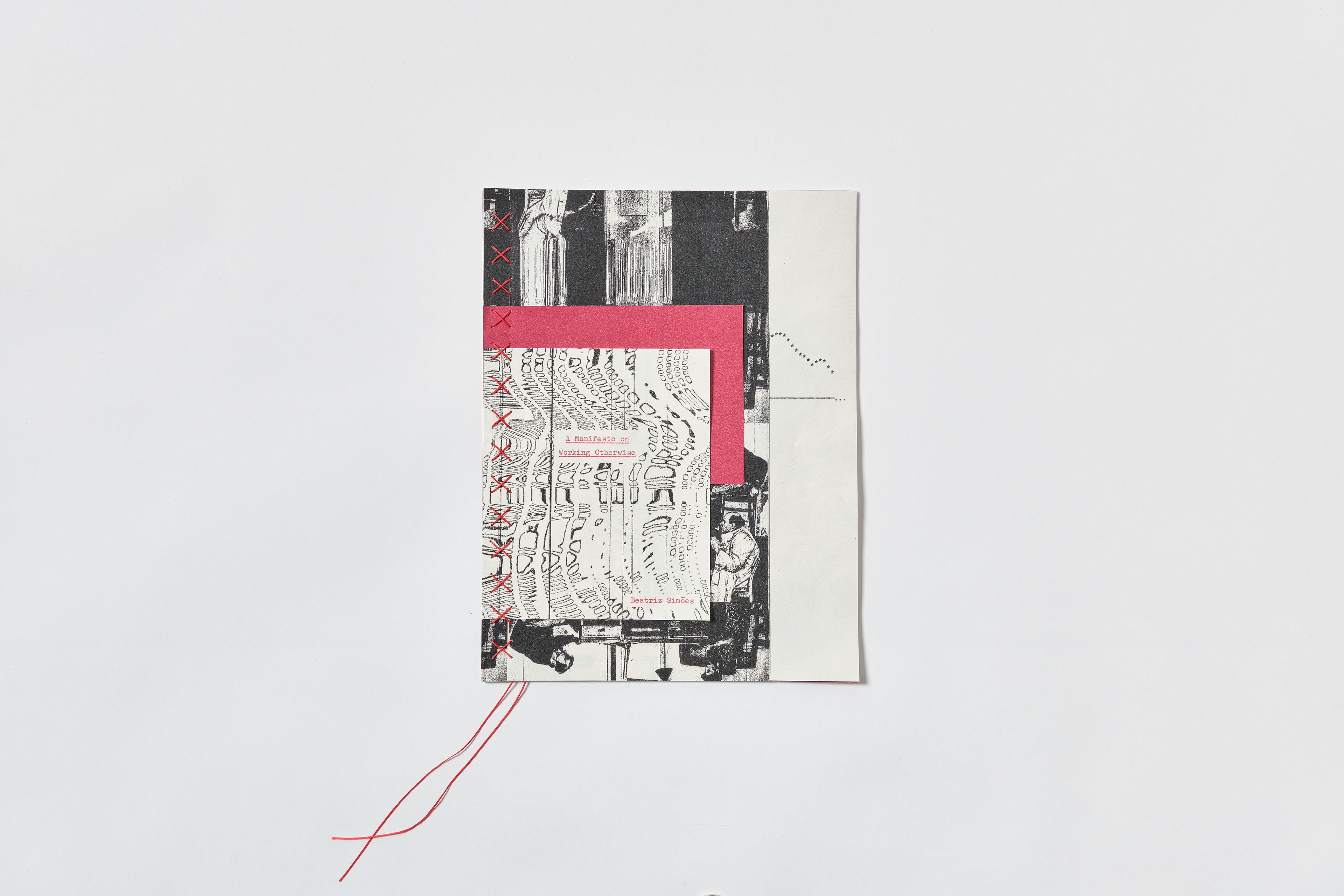
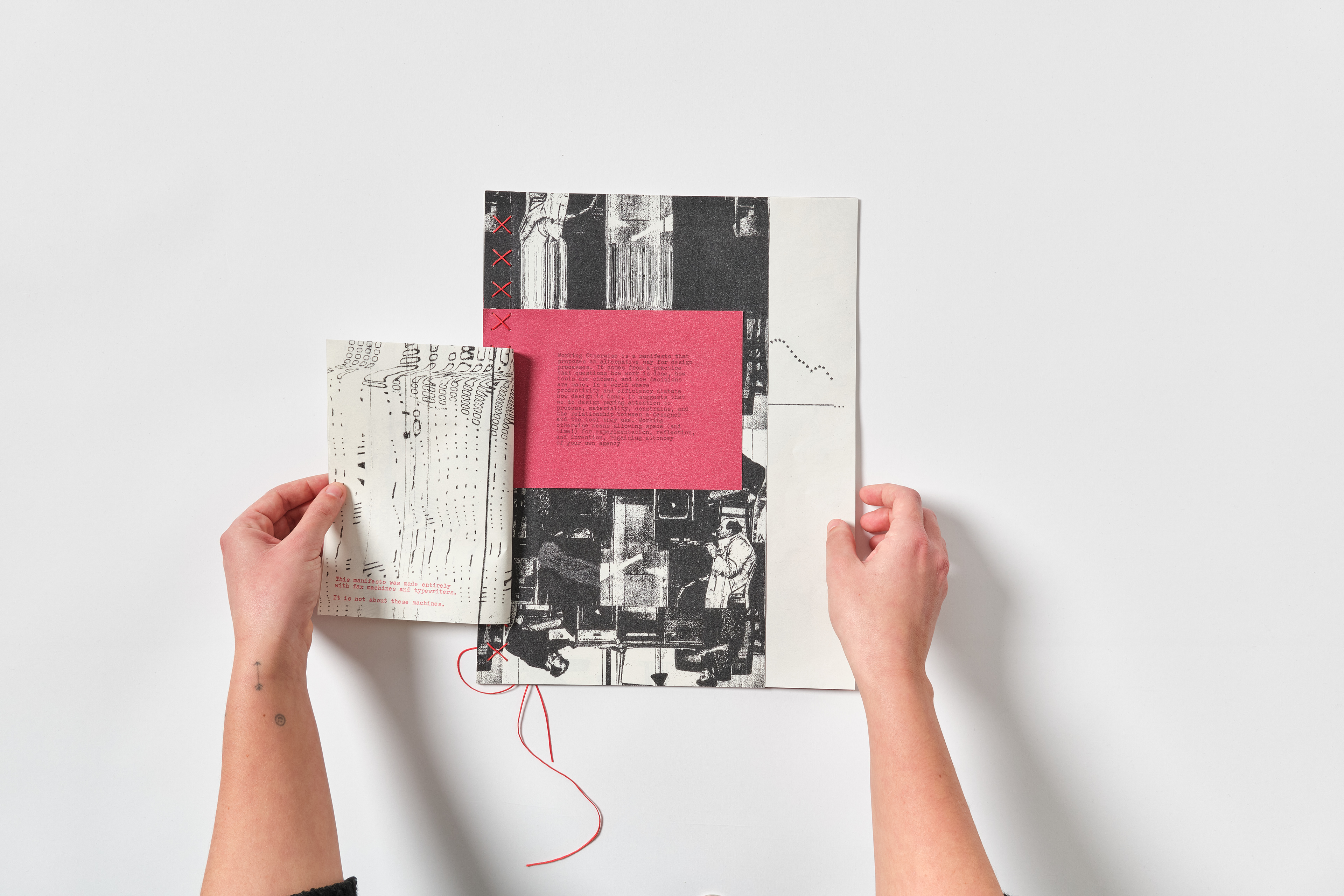
Keeping the hands-on-approach of the project, the pages were bound together manually, using the Japanese stab binding technique. The color of the thread connects to the color accent of the manifesto: red, the only additional color the machines could produce besides black.
After some trials with tiny prototypes, I opted for creating an “X” pattern with the string. Among many meanings, the letter relates to words like "against” or “versus”, resonating with the idea of a manifesto.
Personally, it was also a letter that I chose to do some of my experimentations with the typewriter, since its shape mirrors itself perfectly, filling the square frame of a monospace character.
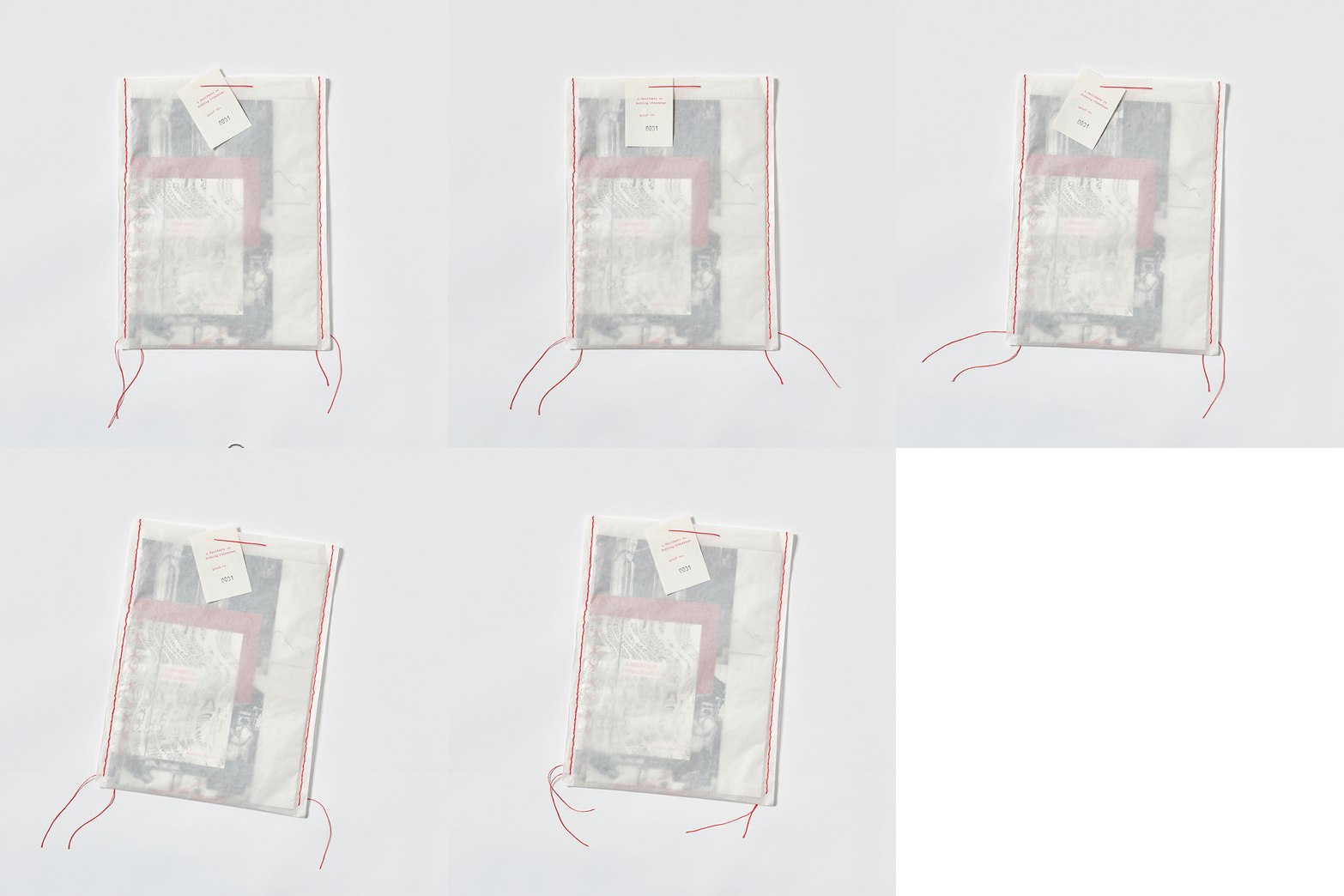
The manifesto does not have a traditional cover. This was not a decision made beforehand, but a consequence
of the process itself. As the work developed through experimentation, the first pages already carried important
traces of the making process, presenting different formats and forming a composition. Adding a conventional cover would hide this, which reveals the manifesto as something built gradually rather than presented as a closed object.
of the process itself. As the work developed through experimentation, the first pages already carried important
traces of the making process, presenting different formats and forming a composition. Adding a conventional cover would hide this, which reveals the manifesto as something built gradually rather than presented as a closed object.
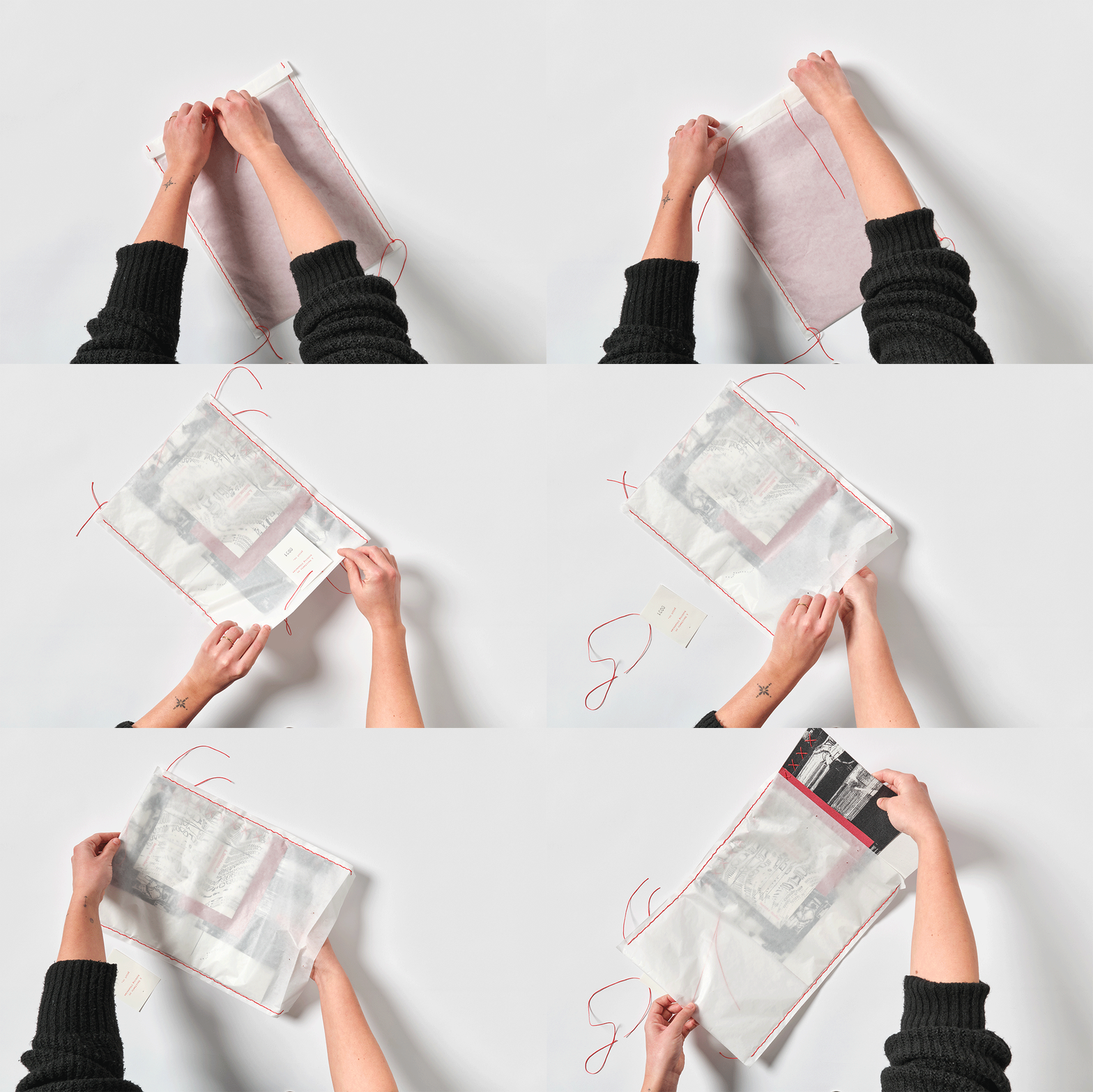
Instead, I chose to wrap the manifesto in a thin, semi-transparent paper that I already had available, offering protection and also relating to the material logic of the project. The transparency keeps the first pages visible,
still requiring and inviting the reader to touch, open, and handle the object to fully access it. I used the same
red thread that I used to bind the manifesto to sew the paper, creating some kind of packaging that can be opened by untieing the string. In this sense, the manifesto does not announce itself immediately, but invites exploration and sparks curiosity, reinforcing the idea of a practice that unfolds through interaction.
still requiring and inviting the reader to touch, open, and handle the object to fully access it. I used the same
red thread that I used to bind the manifesto to sew the paper, creating some kind of packaging that can be opened by untieing the string. In this sense, the manifesto does not announce itself immediately, but invites exploration and sparks curiosity, reinforcing the idea of a practice that unfolds through interaction.